Vehicle Inspection Checklist for Small Business Fleets
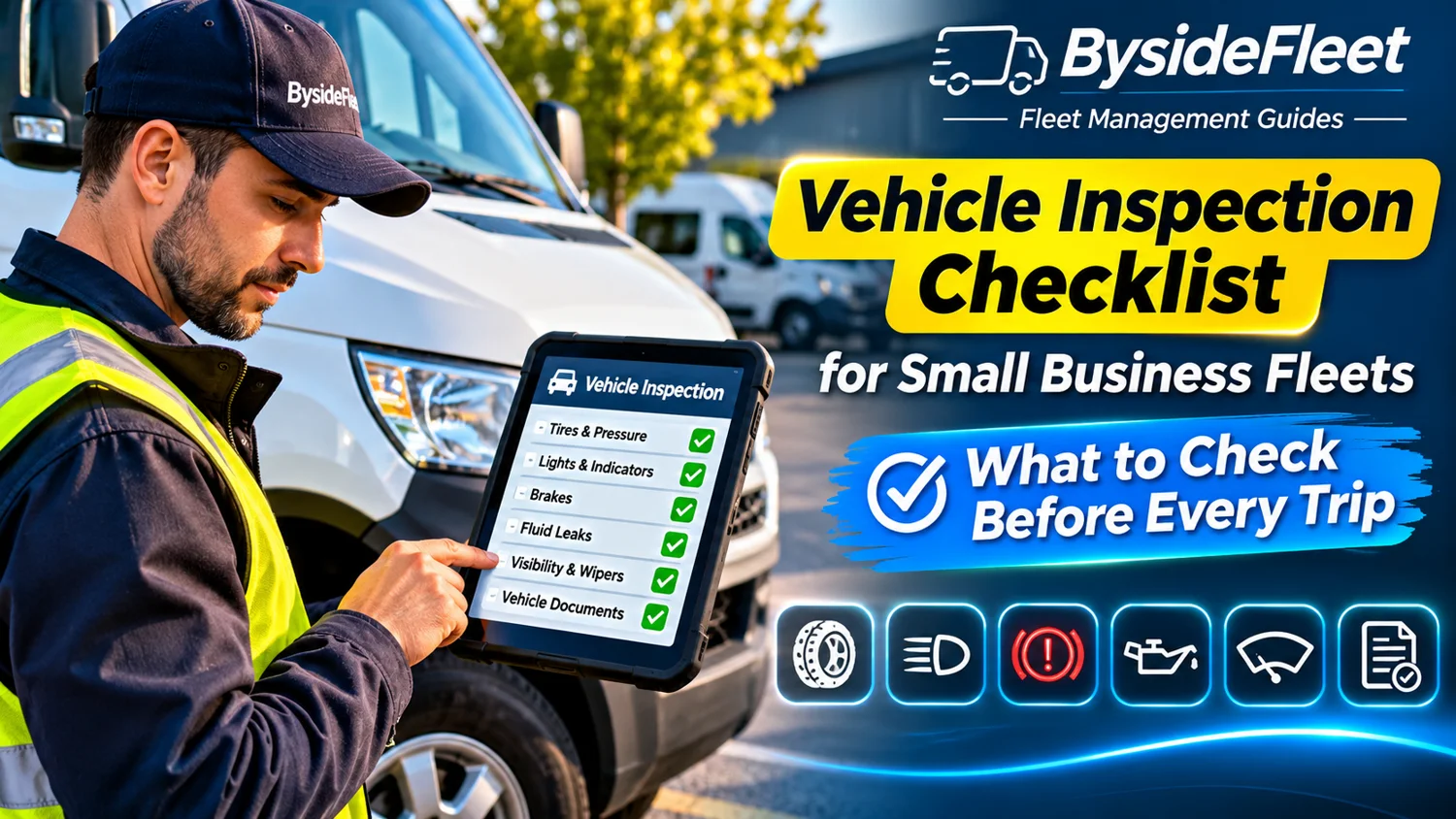
Regular pre-trip inspections can help identify potential safety issues, reduce avoidable downtime and encourage drivers to report problems. They do not replace professional maintenance.
1. Tires and pressure
Look for cuts, bulges, unusual wear and underinflation. Follow manufacturer pressure recommendations.
2. Lights and indicators
Check headlights, brake lights, turn signals and hazard lights.
3. Brakes
Report unusual noises, warning lights or pedal changes. Do not operate a vehicle with a suspected serious brake defect until assessed safe.
4. Fluid leaks
Look for unusual fluid spots and investigate unexplained leaks.
5. Visibility
Check mirrors, windows, windscreen, wipers and washer fluid.
6. Dashboard warnings
Review warnings after startup and follow manufacturer guidance.
7. Exterior and cargo
Check loose panels, doors, damage and cargo restraints where applicable.
8. Documents
Check registration, insurance and required inspection validity according to local rules.
9. Record problems
Identify the vehicle and record findings so the responsible person can review them.
10. Follow up
Track unresolved issues. Safety-critical defects must be addressed before returning the vehicle to service.
How BysideFleet helps
Record inspections and review unresolved issues on the dashboard alongside maintenance and document expiry information. A safer fleet begins with a simple inspection and continues with responsible follow-up.
Try BysideFleet free
30 days. No credit card required.
Try free for 30 days ↗